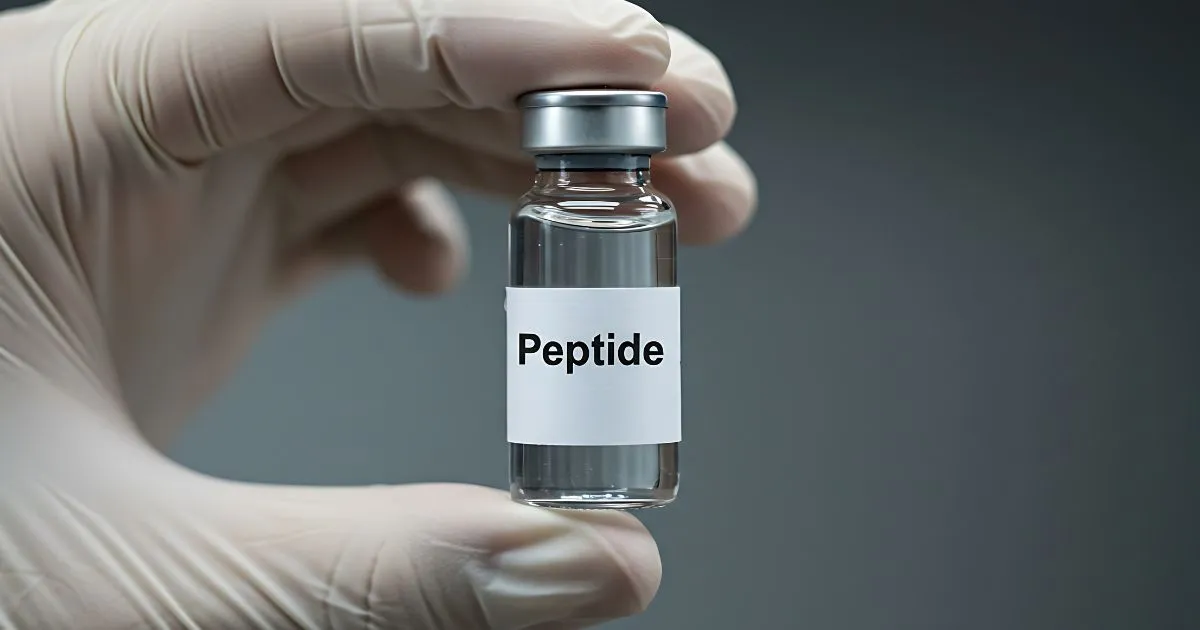
Kisspeptin Storage And Managing For Laboratory Usage
Best Methods For Peptide Storage And Stability For air travel, keep peptides in initial labeled vials with COA documentation in your carry-on. Syringes normally need a clinical letter or prescription. Always check existing TSA and airline-specific standards before taking a trip. When solvent is included, leave the vial for 5 to 15 mins. Put a sterilized needle briefly right into the stopper and allow stress to equalise. This aids prevent solution being displaced when solvent is added. The peptides including Trp, Met, or Cys deposits require special care to stay clear of oxidation. Click for more The solubility of a peptide is largely based on the physical residential properties of its amino acids. The D-enantiomer and the racemate are marked by -D- and -DL-, respectively. The amyloid peptide Aβ (1-42), or various other amyloid mutants may form insoluble aggregates during the storage space.
Ecological Risks To Peptide Stability
- Don't recap needles unless essential, and never get to into a sharps container for any type of reason.
- If none of these apply, the peptide might be aggregated or damaged, stopping regular dissolution.
- Often peptides stand up to dissolving in spite of correct method.
- Whether you go to home or traveling, following these guidelines will guarantee you obtain the most effective results from your procedure.
- They must beadded to the examples and calibrants at the start of the example prep work; accuracy of the amount of the example considered the evaluation must be ensured, andreplicate evaluation of the measurand is favored.
- Numerous peptides contain light-sensitive residues like tryptophan, tyrosine, and methionine that weaken upon direct exposure to UV or noticeable light.
Common Peptide Amounts And Concentrations
Yet it has to be done meticulously and with the appropriate safety measures. Unopened, unpunctured peptide vials can commonly be saved at space temperature for a restricted time, depending on the specific peptide. Nonetheless, for long-term storage space, most peptides should be cooled between 36 ° F to 46 ° F( 2 ° C to 8 ° C). Once it's time to utilize the peptide, reconstitution is executed to restore the peptide to a useful service Peptides reconstituted with clean and sterile water needs to be used within 24 hours, despite refrigeration. For multi-dose vials, sterilized water merely does not work. The rubber stopper sealing your peptide vial works as the gateway for every single reconstitution and withdrawal. Understanding this part prevents contamination and item loss. At this phase, temperature level swings Have a peek at this website and contamination threat become a lot more important. A secure completely dry starting state is still best protected by lessening unneeded direct exposure to dampness, heat, light, and unpredictable atmospheres. As constantly, temperature, light, wetness, and container selection are the principles of the most effective polymer storage. By embracing strict procedures, maintaining thorough records, and continuing to be vigilant in your storage practices, you can safeguard the fragile pleats and biological task of these phenomenal biomolecules. Correct, all peptides will certainly break down gradually in time when in ideal storage problems.What negates peptides?
Salicylic acid''s exfoliating action may destabilize the peptides, reducing their skin-repairing benefits. Recommendation: To avoid any type of communication, use salicylic acid and peptide products at various times. For example, integrate salicylic acid in your early morning routine and peptides in your evening regimen.